
Joint Cutting & Expansion Joints in Indianapolis for controlling where slabs crack as they cure and settle
Preventing Random Cracks in New Concrete Slabs
Elite Concrete Cutting LLC cuts control joints and expansion joints in freshly poured concrete for contractors, builders, and property owners in Indianapolis who need to prevent uncontrolled cracking in driveways, warehouse floors, and sidewalks. You may be managing a new slab pour that spans a large area, or you may have noticed that previous concrete work cracked in irregular patterns because no joints were cut during the curing window.
This service involves sawing shallow grooves into the concrete at planned intervals, creating weak points that guide cracks to form along straight, predictable lines rather than randomly across the surface. Timing is critical—joints are typically cut within hours or days of the pour, while the concrete is still green but firm enough to support the saw without tearing. The depth, spacing, and placement of each joint are calculated based on slab thickness, aggregate type, and expected load.
If you are pouring a new slab or need to add control joints to an existing surface before cracking worsens, reach out to Elite Concrete Cutting LLC to schedule the cuts at the right stage of curing.
Precision Sawing That Protects Long-Term Slab Integrity
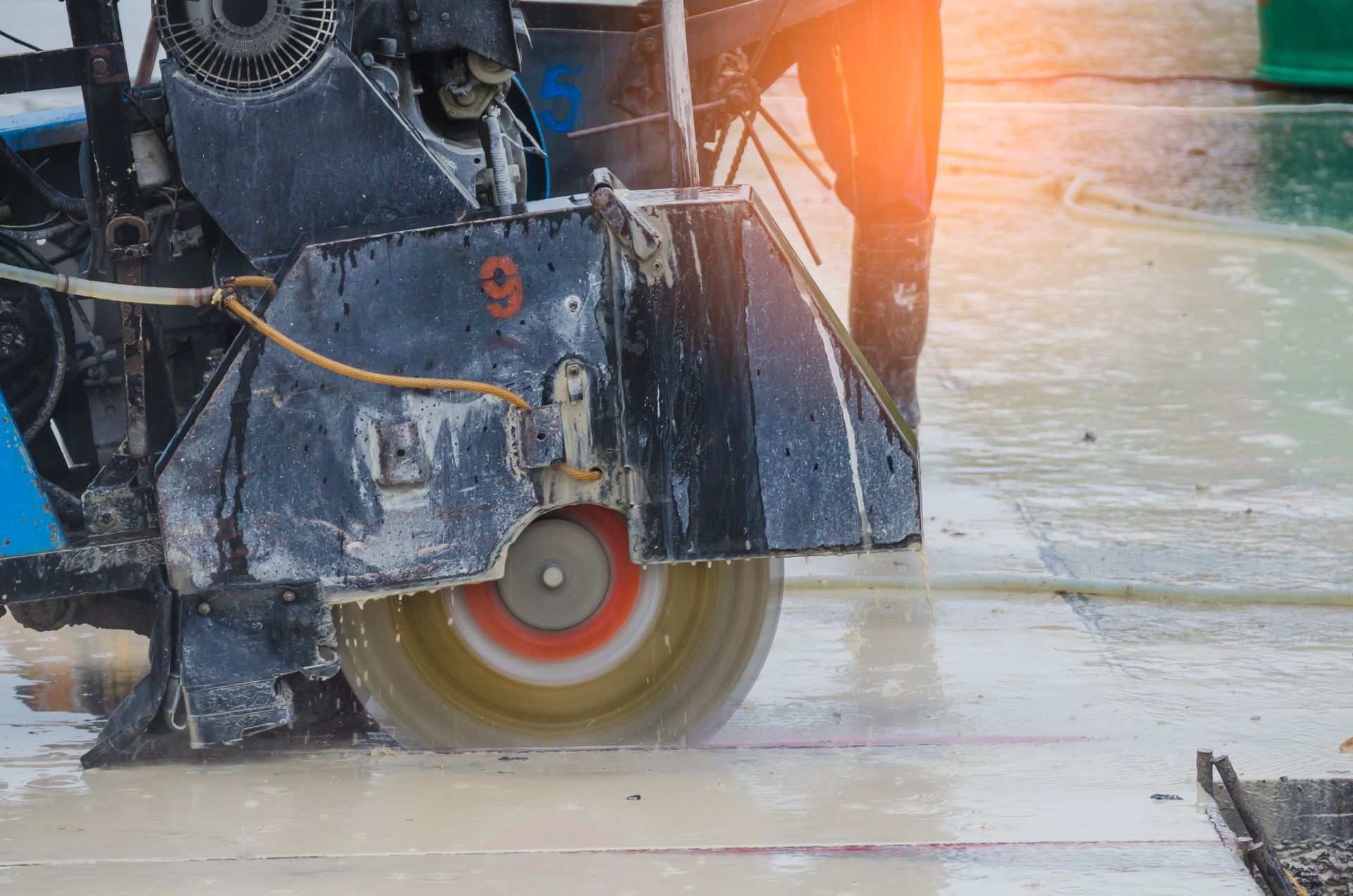
Joint cutting begins with measuring the slab and marking layout lines based on panel size and structural design. A walk-behind concrete saw equipped with a diamond blade makes cuts to a depth of one-quarter to one-third the slab thickness, forming a weakened plane that directs future shrinkage cracks.
Once the joints are cut and sealed, you will see a network of straight, clean lines across the slab, and any cracking that occurs as the concrete cures will follow those joints instead of appearing in random locations. Elite Concrete Cutting LLC uses wet-cutting methods to control dust and reduce blade wear, leaving minimal mess on the finished surface.
The service includes layout planning, sawing, and basic cleanup, but does not include joint sealing or filling unless arranged separately. For industrial floors subject to heavy traffic or chemical exposure, additional joint treatments may be required to meet performance standards.
What Property Owners Ask About Control Joints
Understanding why and when joints are cut helps you coordinate the work with other trades and avoid costly cracking after the slab hardens.
What happens if control joints are cut too late?
Concrete that has already developed internal stress may crack before the saw reaches it, rendering the joint ineffective and leaving the slab with both planned and unplanned fractures.
How deep should a control joint be cut?
Joints are typically cut to one-quarter the slab thickness, so a four-inch slab receives a one-inch groove, which is deep enough to concentrate stress without weakening the slab structurally.
Why are expansion joints different from control joints?
Expansion joints include a compressible filler material and allow adjacent slabs to move independently, while control joints simply guide where a single slab cracks as it shrinks.
When are expansion joints necessary in Indianapolis?
Temperature swings between winter and summer cause concrete to expand and contract, so expansion joints are essential where slabs meet buildings, walls, or other fixed structures.
How soon after pouring can joints be cut?
Most slabs are ready within four to twelve hours, depending on mix design and ambient temperature, with the goal of cutting after the surface is firm but before internal cracking begins.
For new construction projects or large pours that require precise joint placement, contact Elite Concrete Cutting LLC to coordinate timing and layout with your concrete contractor.